01Why bone survives here at all
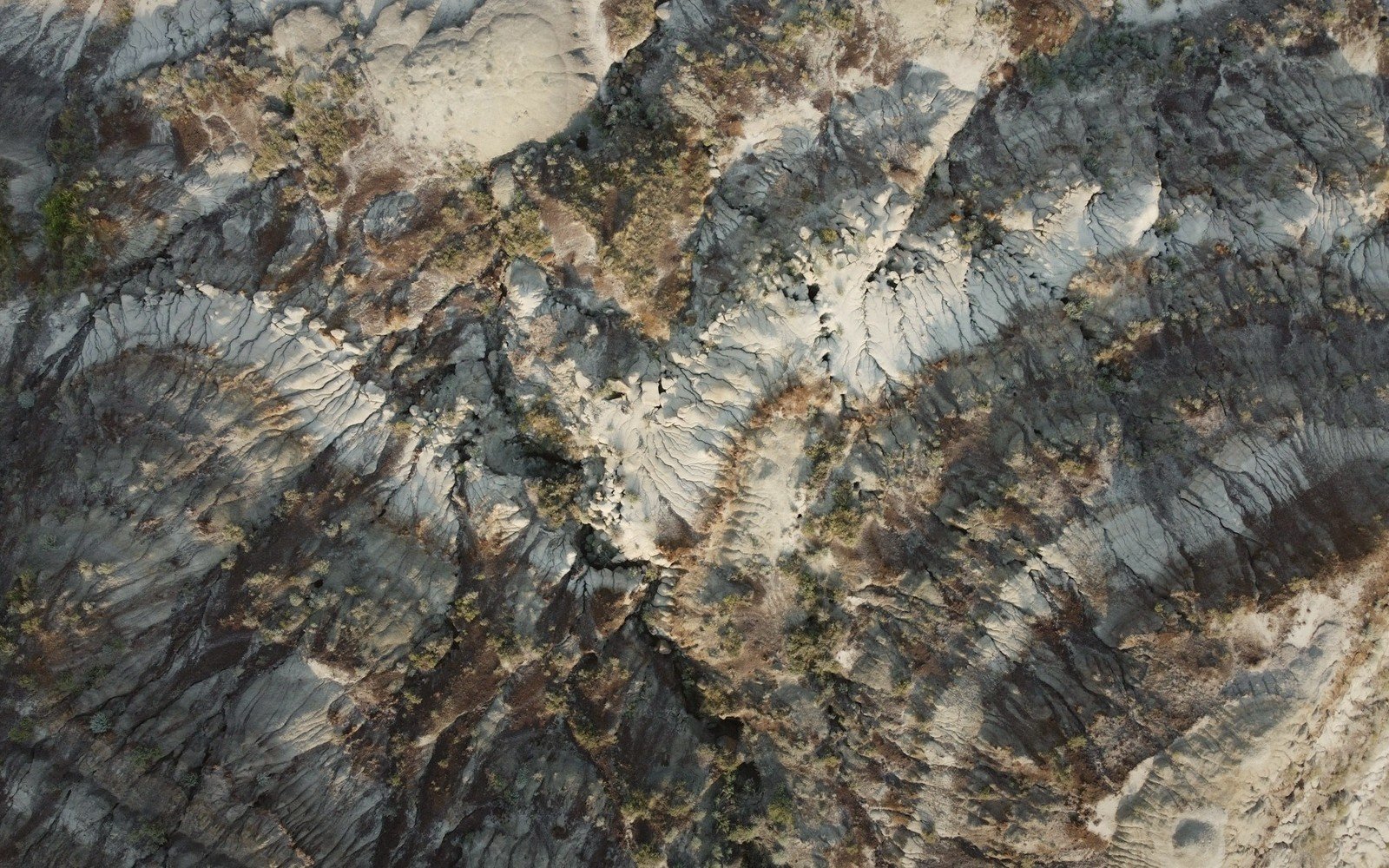
The Badlands wall is not simply eroding — it is being read. Every wet season strips a fresh layer from the pinnacles and draws, and what it exposes has been sealed inside since the late Eocene and Oligocene epochs, roughly 23 to 37 million years ago. That span of time corresponds to the White River Group, the sequence of pale mudstones and siltstones that makes up most of what visitors see from the overlooks along the Loop Road. The rock looks sterile. It is, in fact, one of the most productive fossil beds in the world.
The reason bone survives here comes down to burial chemistry. The ancient landscape was a broad floodplain at the eastern foot of a rising ancestral Rocky Mountain system. Periodic ashfalls from volcanoes to the west — some deposited in thick, datable layers visible as white or cream bands in the wall — mixed with river sediment and fine windblown material. Animals that died on this plain could be buried quickly and deeply. Minerals in the groundwater gradually replaced organic material in bone before it could decay. What remained is permineralized bone: rock in the shape of a skeleton, faithful down to the internal structure.
The density of fossils in the White River Group reflects both the richness of the original fauna and the pace of current erosion. The Badlands erode at a measurable rate — inches of surface lost per year in places — which means specimens that were entombed millions of years ago are now exposed within a human lifetime. Some wash out intact; many do not survive the first freeze-thaw cycle after exposure. The window between emergence and destruction is brief.
02What has come out of the rock
The dominant animals of the White River world were nothing like the bison and pronghorn on the grassland above. Titanothere — massive, vaguely rhinoceros-shaped browsers now called brontotheres — roamed the Eocene floodplain in numbers that the fossil record makes plain. Their bones appear throughout the lower, older beds. Above them in the stratigraphic column, the Oligocene layers yield a different cast: Archaeotherium, a pig-sized and pig-tempered animal with a deep skull; early Mesohippus, a three-toed horse about the size of a large dog; Merycoidodon, an oreodont that had no modern equivalent and filled a grazing niche something like a sheep. The Badlands have produced more oreodont material than almost anywhere else on the continent.
The Badlands have produced more oreodont material than almost anywhere else on the continent.
Among the most significant finds in the broader White River country was a nearly complete skull of Protoceras, a small deer-like animal with bony head ornaments unlike anything living today. Individual specimens of Poebrotherium, an early camel, have helped establish the North American origin of the camel lineage. The record here is not simply large — it is taxonomically dense, preserving a detailed snapshot of a fauna in transition as Eocene warmth gave way to cooler, drier Oligocene conditions.
Badlands National Park holds jurisdiction over fossil collection on its land, and specimens found within the park boundaries belong to the public trust. Removal by visitors is prohibited. Active research still yields new material; the park maintains working relationships with academic paleontologists, and significant finds are catalogued and studied rather than lost to private collection.
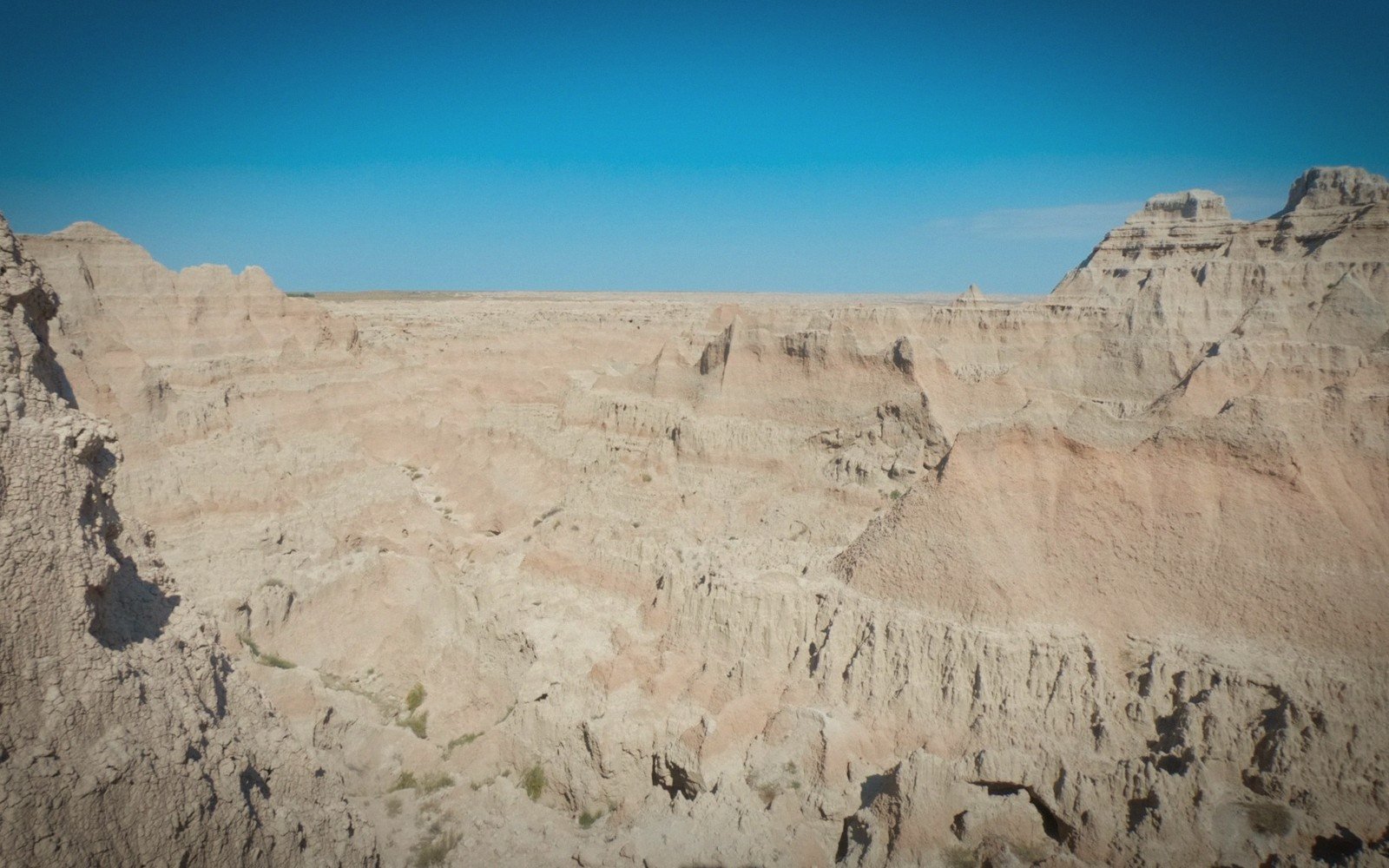
- Eocene epoch (ending ~34 million years ago)brontotheres and early fauna dominate the floodplain
- Oligocene epoch (~23–34 million years ago)cooler, drier conditions; oreodonts, early horses, camels
- Presentongoing erosion continuously exposes new fossil material
Elevations, ages and distances here are approximate and given as published. Ground conditions change; the terrain descriptions do not.
03Ground named in this piece
White River Group
The Badlands
the primary sedimentary formation exposed in Badlands National Park
Badlands National Park
The Badlands
federally protected area holding jurisdiction over fossil material within its boundaries