01Stone City
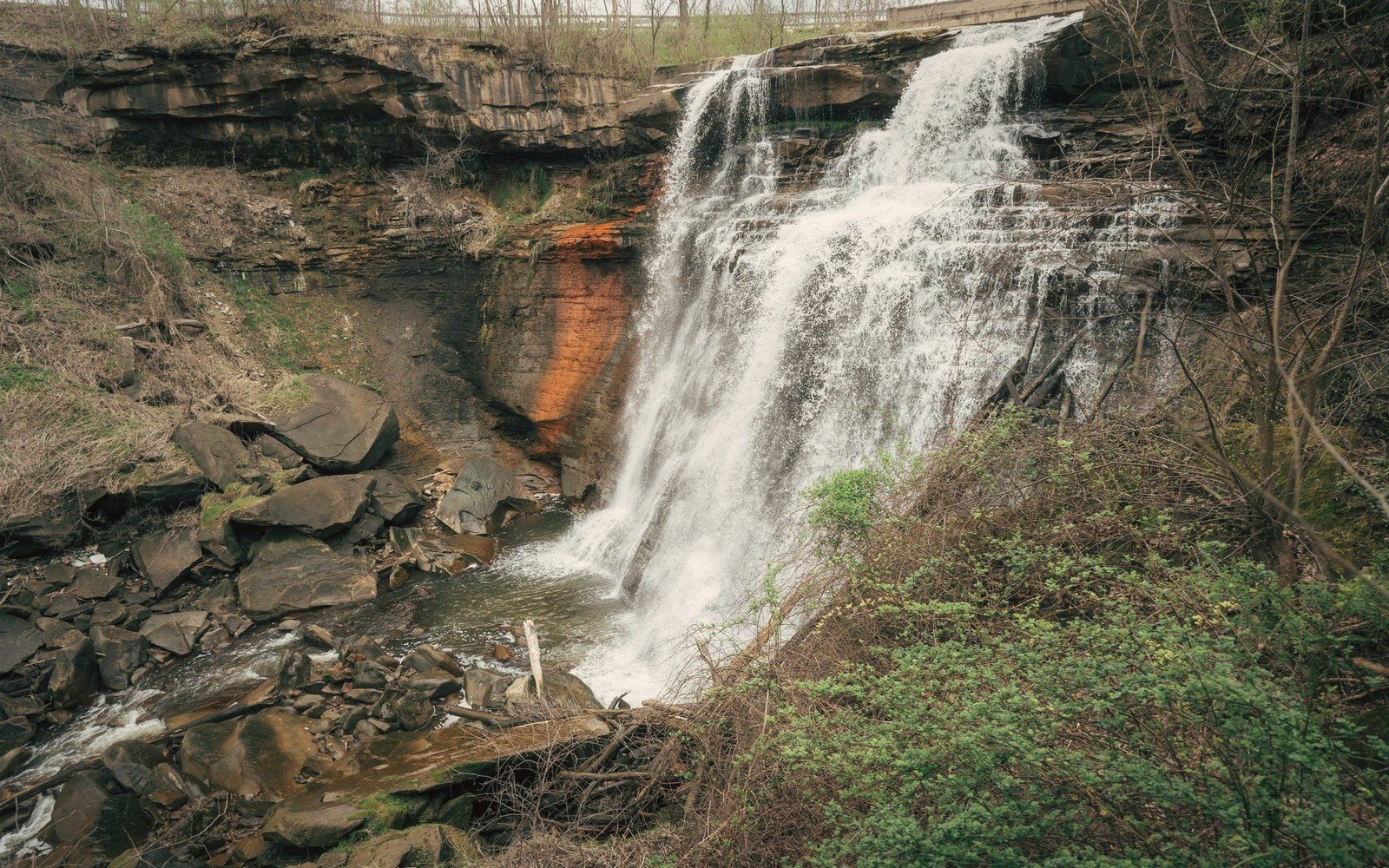
The falls that name Sioux Falls aren't tall — the Big Sioux River drops perhaps twenty feet over a series of ledges — but the rock they expose is extraordinary. Sioux quartzite is one of the oldest surface rocks in North America, laid down as beach sand roughly 1.7 billion years ago and compressed, over deep time, into something almost indestructible: hard, dense, and a vivid rose-pink that intensifies when wet.
Falls Park, on the north edge of downtown, puts you directly on the outcrop. The river braids across the ledges and drops in stages, and the quartzite surfaces everywhere — polished smooth in the channel, rough and iron-stained at the margins. The rock's durability is precisely why the falls survived the 19th-century industrial push to harness them: mills and a packing plant came and went, but the ledges remain.
Walk a few blocks into the historic core and the same stone reappears in building facades, retaining walls and sidewalk blocks. Nineteenth-century builders quarried it locally, and its color gives the older downtown a warmth unusual for a northern plains city. The Minnehaha County Courthouse, the Cathedral of Saint Joseph, and stretches of Phillips Avenue all carry it. Once you register the shade, you see it everywhere — the city is literally made of its own riverbed.
By the numbers
Elevations, ages and distances here are approximate and given as published. Ground conditions change; the terrain descriptions do not.
02Ground named in this piece
Falls Park
Small Towns
city park in northern Sioux Falls preserving the quartzite falls and river ledges
Big Sioux River
Small Towns
river draining eastern South Dakota; creates the falls at Sioux Falls
Minnehaha County Courthouse
Small Towns
historic downtown building constructed of local Sioux quartzite
Cathedral of Saint Joseph
Small Towns
Sioux Falls landmark featuring Sioux quartzite in its construction